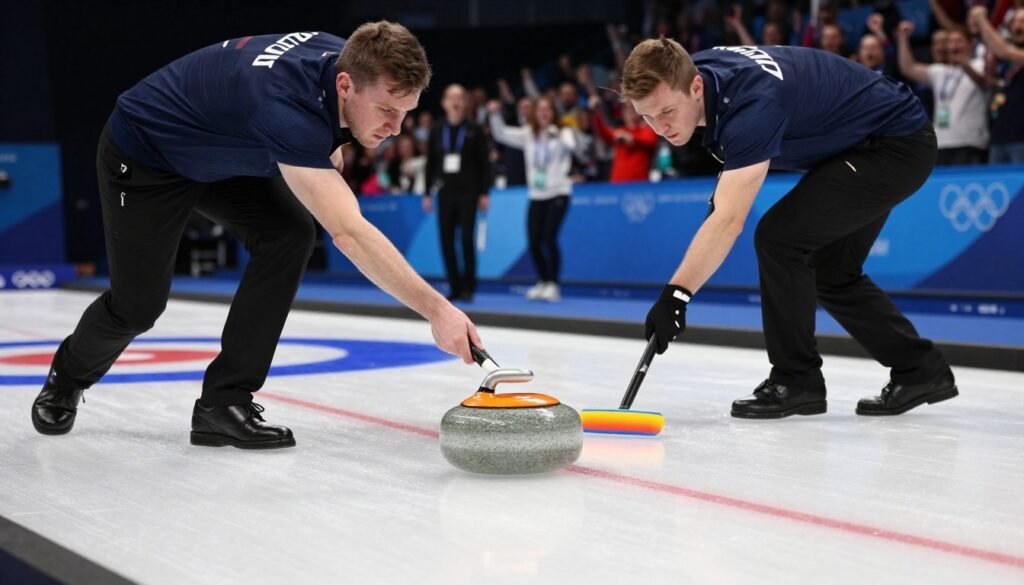
Ever watched a curling match and wondered about the science behind the sweeping? It’s a winter sport that amazes me with its precision. Many newcomers ask how do brushes affect the stone’s path in olympic curling? It’s a key question that’s at the heart of every win.
By using friction, athletes can change the stone’s path on the ice. I want to share the amazing physics behind this. Knowing how do brushes affect the stone’s path in olympic curling will change how you watch the game.

I aim to give a clear, easy guide to these details. Let’s dive into why this simple action is so important for success on the ice.
Key Takeaways
- Sweeping creates friction, which warms the ice surface slightly.
- This process reduces resistance, allowing the granite to travel further.
- Strategic brushing helps to straighten the trajectory of the sliding object.
- Teamwork and communication are essential for precise placement.
- Mastering these techniques is vital for competitive success.
The Science Behind Sweeping: How Do Brushes Affect the Stone’s Path in Olympic Curling?
The secret to controlling a curling stone is in the brush and ice interaction. Watching a match, I see how a few seconds of hard sweeping can change everything. Athletes use pressure to guide the stone with great precision.

The Mechanics of Friction and Heat
When sweepers press on the ice, they’re not just cleaning. The brush creates heat on the ice surface. This heat makes the stone slide smoothly.
Good sweeping techniques in curling need steady pressure. Too little pressure, and the ice won’t heat up enough. This small change in temperature can change the whole game plan.
How Sweeping Alters the Stone’s Trajectory
The main goal of sweeping is to control the stone rotation in curling as it moves. Sweepers change the ice surface to affect the stone’s interaction with the pebble. This is key to keeping the stone on course.
The Impact on Curl
Sweeping helps reduce the stone’s curl. It keeps the stone moving straight, which is essential for the skip’s strategy.
The Impact on Distance
Sweeping also helps the stone go further. It reduces friction, so the stone loses less energy. This skill is what makes Olympic champions different from amateurs.
Recent Developments in Brush Technology and Competitive Fairness
The world of competitive curling has changed a lot because of new brush technology. These updates have changed how curling works, making athletes and officials think differently about the sport.

The Evolution of Fabric and Bristle Design
Before, sweepers used horsehair brushes for a certain feel and grip. Now, we see advanced synthetic fabrics that give unprecedented control over the ice.
These new materials can do things on the ice that were not possible before. Here’s a table showing the main differences between these materials:
| Material Type | Friction Level | Durability |
|---|---|---|
| Horsehair | Moderate | Low |
| Synthetic Fabric | High | High |
| Hybrid Blend | Variable | Medium |
Regulatory Changes in Olympic Equipment Standards
The World Curling Federation (WCF) has set strict rules to handle the impact of brush technology on curling. These rules make sure no equipment gives an unfair edge in big games.
“The integrity of our sport relies on the skill of the athlete, not their gear.”
To keep things fair, the WCF now has rules for all brushes in international games. Key rules include:
- Standardised fabric weave patterns to prevent excessive ice scarring.
- Strict limits on the abrasiveness of brush heads.
- Mandatory pre-match equipment inspections for all Olympic teams.
Ensuring a Level Playing Field
I think these standards are key to keeping the game’s spirit alive. By following these rules, the true skill of the curler is what matters most. The ongoing impact of brush technology on curling shows that progress must respect the sport’s traditions.
The Role of Surface Friction and Ice Temperature in Modern Matches
Every curling match is a battle against the elements. Even small changes in ice temperature and curling conditions can change the game. The ice is never static, and its changes decide the outcome of every shot.
Understanding surface friction in curling is key for any team. It helps them control their stone.

How Ice Conditions Dictate Sweeping Intensity
Sweepers must watch the ice to know how hard to sweep. If the ice is sticky, they need to sweep harder. This heat helps the stone go further and stay on course.
But if the ice is fast and slick, less sweeping is needed. The best teams adjust their effort based on the ice. This ensures the stone reaches the house with perfect precision.
The Relationship Between Pebble and Brush Pressure
The ‘pebble’ is tiny water droplets frozen on the ice. These bumps are where the stone touches the ice. Brush pressure changes these droplets, affecting surface friction in curling.
Finding the right brush pressure is tricky. Too little heat, and the stone doesn’t move right. Too much, and it loses its curl too soon. Sweepers need immense physical control to get it just right.
Managing Ice Temperature Fluctuations
Small changes in the arena can affect the stone’s movement. Warmer air makes the ice softer and slower. Cold air makes it faster and more brittle.
Successful teams see ice temperature and curling as a science. They track changes to predict the stone’s behavior. Staying ahead of these changes can win or lose a match.
Expert Perspectives on Sweeping Tactics and Stone Control
The best teams see sweeping as a complex strategy, not just hard work. They use competitive curling strategies to control the ice. This skill makes them stand out from amateur clubs.

Strategic Communication Between the Skip and Sweepers
Good teams talk clearly and often. The skip plans the game, telling sweepers how hard to push. Clear, concise instructions help sweepers adjust to the stone’s speed and path.
When the skip asks for more effort, sweepers must push together right away. This teamwork keeps the team focused, even under pressure. It’s this seamless connection that helps control the stone’s path.
Mastering the Art of Directional Sweeping
Brushing tactics in curling have become a precise science. Sweeping on one side of the stone can make it go straighter or wider. This skill is key for improving stone control in curling.
It’s all about understanding how the ice reacts to the brush. When done right, it’s like moving the stone with an invisible force.
Techniques for Precision Placement
To place the stone perfectly, sweepers need to control their body and brush angle. Keeping a steady rhythm is important. Precision is the ultimate goal, reached through practice and strategy.
- Maintain a stable base to ensure maximum downward pressure.
- Adjust the angle of the brush head to steer the stone away from obstacles.
- Listen intently to the skip for real-time adjustments during the delivery.
Conclusion
Watching curling at the Winter Olympics is like seeing a dance of human effort and science. The game’s success depends on special brushes, the ice, and smart decisions. Understanding these details makes the game more interesting.
Modern curling tools, like those from Hardline Curling, have changed the game. Athletes now need to mix strength with finesse. Each sweep is key to guiding the stone towards the target.
This summary aims to show you the skill needed at the top level. You might see the hard sweeping or team communication next time you watch. Share your thoughts on these tactical moments. Your input keeps the excitement of curling alive.
You May Also Raed: Simplifydiggs
FAQ
How do brushes affect the stone’s path in Olympic curling?
What are the primary sweeping techniques in curling used by professionals?
How does surface friction in curling change during a match?
What has been the impact of brush technology on curling in recent years?
Does sweeping influence the stone rotation in curling?
Why are ice temperature and curling conditions so closely linked?
How do competitive curling strategies involve the use of the brush?
What is the secret to improving stone control in curling?